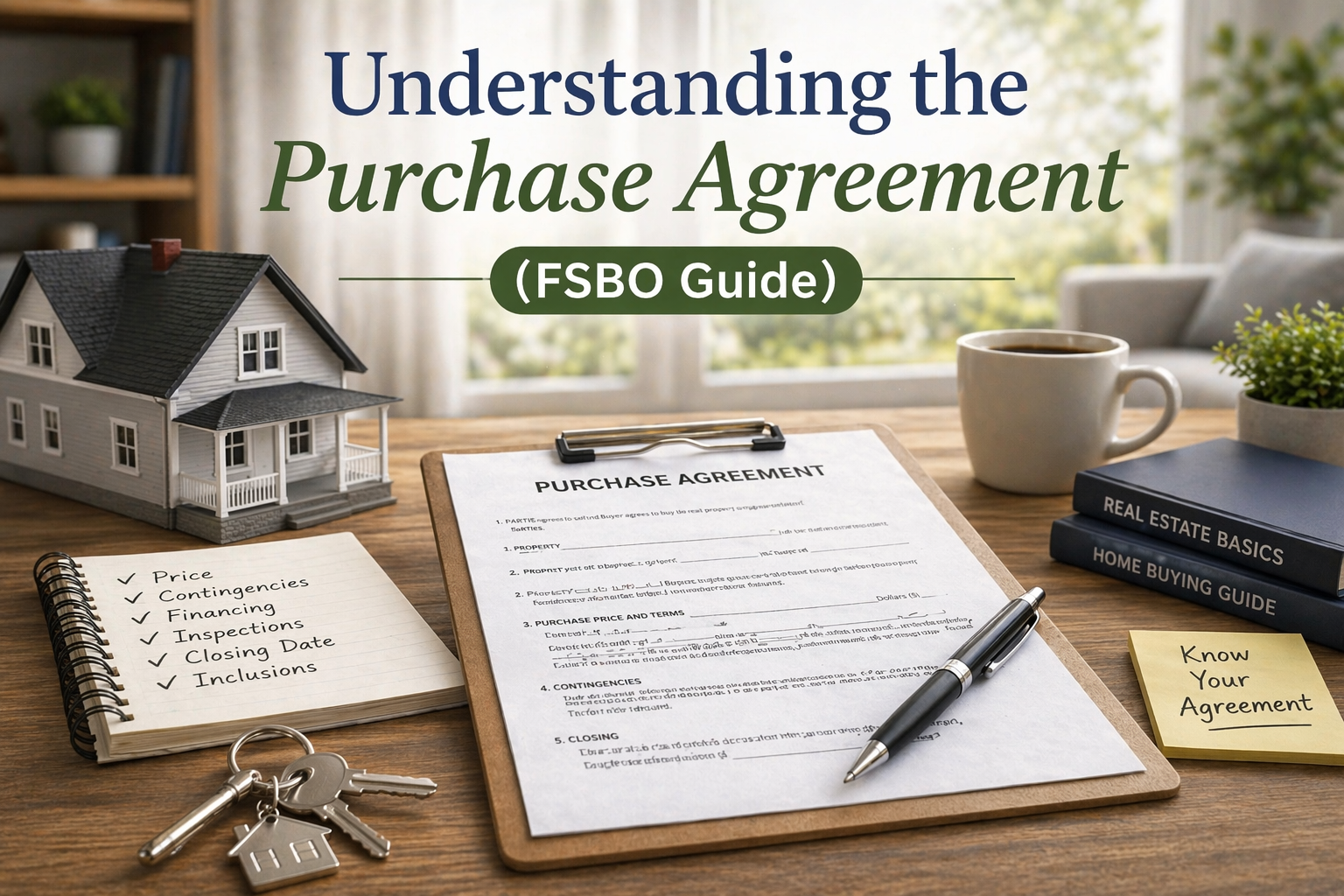
Understanding the Purchase Agreement (FSBO Guide)
Once you receive an offer on your home everything becomes more serious. Now you’re not just marketing your home, you're entering a legal agreement. That agreement is called the purchase agreement.
For many For Sale By Owner (FSBO) sellers, this is the most intimidating part of the process, but you don’t need to be a lawyer to understand it, you just need to understand how it works, what to look for, and what actually matters.
In this guide, I’ll walk you through the purchase agreement in a simple, clear way so you can review offers with confidence.
What Is a Purchase Agreement?
A purchase agreement is a legally binding contract between the buyer and the seller.
What It Does
It outlines:
- The price
- The terms of the sale
- The conditions that must be met
Why It Matters
Once signed, both parties are committed – unless specific conditions allow them to back out.
👉 Read next: How to Handle Offers Without a Realtor (FSBO Guide)
The Key Sections You Need to Understand
Let’s break this down into the most important parts.
1. Purchase Price
This is the most obvious part, but not the only thing that matters.
What to Look For
- Offered price
- How it compares to your expectations
PRO TIP
The highest offer is not always the best offer
👉 Read next: How to Compare Multiple Offers on Your Home (FSBO Guide)
2. Earnest Money Deposit
This is the buyer’s “good faith” deposit.
Typical Range
👉 1%–3% of the purchase price
Why It Matters
It shows:
- Buyer commitment
- Financial seriousness
What Happens to It
- Held by a third party (title/escrow)
- Applied to the purchase at closing
- If the buyer terminates for a non-contractual reason, you may be allowed to keep some or all of the earnest money deposit
👉 Read next: The Psychology of Negotiating a Home Sale (FSBO Guide)
3. Financing Terms
How the buyer plans to pay.
Common Types
- Cash
- Conventional loan
- FHA or VA loan
Why This Matters
Different financing types have:
- Different timelines
- Different risks
👉 Read next: Cash Offer vs Financed Offer: Which Is Better? (FSBO Guide)
4. Contingencies
This is one of the most important sections.
What Is a Contingency?
A condition that must be met for the deal to proceed.
Common Contingencies
Inspection Contingency
Buyer can inspect the home and request repairs, financial concessions, or back out of the deal.
Appraisal Contingency
Home must appraise at or above the purchase price.
Financing Contingency
Buyer must secure a loan.
Why This Matters
Contingencies give buyers ways to exit the contract.
👉 Read next: What Contingencies Mean in Real Estate (And Why They Matter)
5. Timeline and Deadlines
What’s Included
- Inspection deadlines
- Loan deadlines
- Closing date
Why This Matters
Deadlines are critical. Missed deadlines can impact the deal or create legal issues.
6. Closing Costs and Concessions
What to Look For
- Who pays what
- Any requested credits
Example
Buyer may ask seller to cover part of closing costs.
👉 Read next: How to Estimate Your Net Proceeds When Selling FSBO
7. Inclusions and Exclusions
What This Covers
What stays with the home:
- Appliances
- Fixtures
- Other items
Why This Matters
Avoids confusion later.
8. Possession Date
What It Defines
When the buyer takes possession.
Common Options
- At closing
- After closing (rent-back situations)
9. Default and Termination Terms
What This Covers
What happens if:
- Buyer backs out
- Seller defaults
Why This Matters
Defines the consequences and potential penalties if either party would like to exit the agreement, or if one party defaults on the agreement (backs out for a non-contractual reason).
PRO TIP
The FSBO Masterclass online course goes deep into topics including purchase contracts, offers reviews, and legal issues.
How to Evaluate an Offer (Beyond Price)
This is where many FSBO sellers make mistakes.
Look at the Full Picture
Consider:
- Price
- Contingencies
- Timeline
- Buyer strength
Example
A slightly lower offer with:
- Fewer contingencies
- Strong financing
May be the better choice.
👉 Read next: What to Do If You Receive a Lowball Offer (FSBO Guide)
Should You Get Help Reviewing the Contract?
This is a fair question.
Your Options
- Review it yourself (with guidance)
- Consult a real estate attorney (always smart)
- Ask for clarification from involved parties
When It Makes Sense to Get Help
- You’re unsure about terms
- The deal is complex
- You want added confidence
- You feel there may be legal risk if you get something wrong
Important Perspective
You can still sell FSBO and get help where it matters.
PRO TIP
If you think you may need legal advice, GET LEGAL ADVICE. A short attorney consultation may save you thousands in the long run.
Common Mistakes FSBO Sellers Make
Focusing Only on Price
Ignoring other important terms.
Not Understanding Contingencies
These can dramatically affect risk.
Missing Deadlines
Can create legal or financial issues.
Not Asking Questions
You’re allowed to clarify anything.
👉 Read next: Common Negotiation Mistakes FSBO Sellers Make (And How to Avoid Them)
Pro Tips From a Real Estate Professional
The Cleanest Offer Often Wins
Less complexity = smoother transaction
Contingencies = Risk
Fewer contingencies typically mean a stronger offer
Clarity Is Everything
If you don’t understand something, don’t guess
Stay Organized
Track deadlines and terms carefully
Legal Advice Is a Pro Move
Even real estate professionals consult attorneys from time to time
Frequently Asked Questions
Is the purchase agreement legally binding?
Yes, once signed by both parties
Can I negotiate the terms?
Yes, everything in the contract is negotiable
What is the most important part of a purchase agreement?
Contingencies and overall terms, not just price
Do I need a lawyer?
Typically no, but it can be helpful in certain situations
Final Thoughts
The purchase agreement may seem complex at first, but once you break it down, it becomes manageable.
When you understand:
- The key sections
- What to look for
- How to evaluate offers
…you can move forward with confidence and make smart decisions.
Download Your FSBO Offer Review Checklist
If you want a simple way to review and compare offers, including purchase agreement terms, I created a checklist to help you stay organized and confident.
👉 Download your free FSBO checklists here