How to Handle Offers Without a Realtor (FSBO Guide)
Receiving an offer on your home is exciting, but it’s also where things get serious.
This is the moment where your decisions can directly impact:
- Your final sale price
- Your risk level
- Whether the deal actually closes
In this guide, you’ll learn how to review, compare, and negotiate offers so you can choose the best one for your situation.
Why Handling Offers Correctly Matters
Many FSBO sellers focus on getting offers, but don’t have a plan to evaluate them.
The Highest Offer Isn’t Always the Best Offer
A higher price doesn’t guarantee:
- A smooth transaction
- A successful closing
Sometimes a slightly lower offer is actually stronger.
Offers Include More Than Price
Every offer includes multiple components, including:
- Financing
- Contingencies
- Timeline
- Earnest money
Understanding these is critical.
👉 Read next: How to Sell Your Home FSBO (Complete Guide)
What Is Included in a Real Estate Offer?
Before you evaluate offers, you need to know what you’re looking at.
Key Components of an Offer
Purchase Price
The amount the buyer is offering.
Earnest Money
A deposit showing the buyer is serious.
Financing Type
- Cash
- Conventional loan
- FHA or VA loan
Contingencies
Conditions that must be met for the deal to proceed.
Common contingencies:
- Inspection
- Appraisal
- Financing
Closing Timeline
When the buyer wants to close.
👉 Read next: Understanding the FSBO Transaction Process (Step-by-Step Guide)
Step 1: Review the Entire Offer (Not Just the Price)
It’s tempting to focus on price, but that’s only one piece of the puzzle.
What to Look For
- Strength of financing
- Number of contingencies
- Timeline
- Risk factors
Example
Offer A:
- $600,000
- FHA loan
- 45-day timeline
- Multiple contingencies, including an appraisal
Offer B:
- $590,000
- Cash
- 20-day timeline
- Fewer contingencies: no loan or appraisal deadlines
Offer B may actually be stronger.
👉 Read next: Understanding the Purchase Agreement (FSBO Guide)
Step 2: Evaluate Buyer Strength
Not all buyers are equal.
Strong Buyers Typically Have:
- Solid financing or cash
- Pre-approval (or proof of funds)
- Fewer contingencies
Why This Matters
Stronger buyers are more likely to:
- Close on time
- Avoid complications
- Reduce your risk
PRO TIP
Review your buyer's lender letter or proof-of-funds letter to verify they're financially qualified.
👉 Read next: Cash Offer vs Financed Offer: Which Is Better? (FSBO Guide)
Step 3: Understand Contingencies
Contingencies are one of the most important parts of an offer.
Common Contingencies Explained
Inspection Contingency
Allows the buyer to request repairs or credits.
Appraisal Contingency
Protects the buyer if the home appraises low.
Financing Contingency
Protects the buyer if they can’t secure a loan.
Why Contingencies Matter
More contingencies = more risk for you.
👉 Read next: What Contingencies Mean in Real Estate (And Why They Matter)
Step 4: Compare Multiple Offers (If You Have Them)
If your home is priced well, you may receive multiple offers.
How to Compare Offers
Look at:
- Price
- Financing
- Contingencies
- Timeline
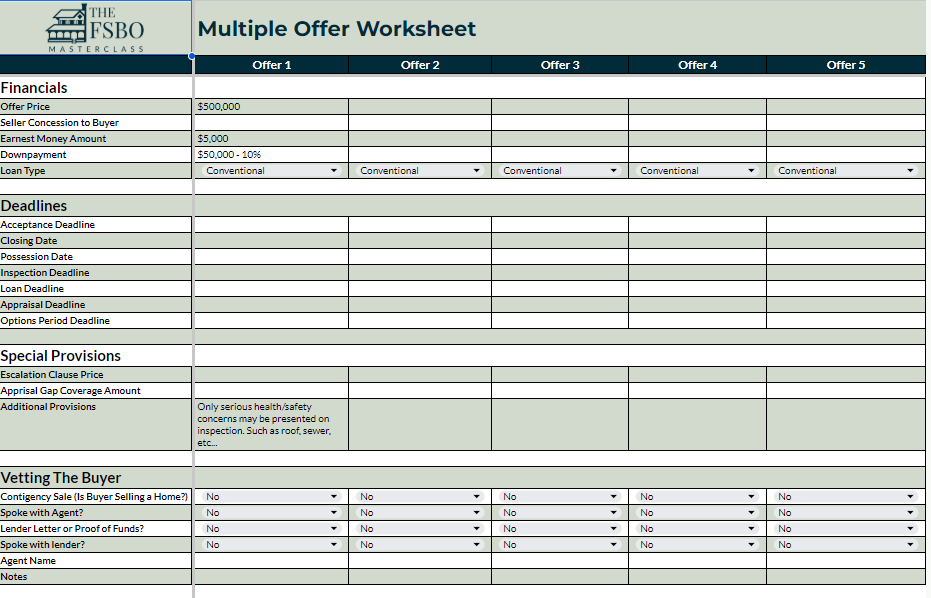
PRO TIP
Create a side-by-side comparison. The multi-offer spreadsheet seen below is included in The FSBO Masterclass online course.
👉 Read next: How to Compare Multiple Offers on Your Home (FSBO Guide)
Step 5: Decide How to Respond
You have three main options.
Accept the Offer
Choose this if:
- The terms are strong
- The risk is low
- The price meets your goals
Counter the Offer
This is the most common response.
You can negotiate:
- Price
- Timeline
- Contingencies
Reject the Offer
Choose this if:
- The terms are not acceptable
- The offer is exceptionally weak
👉 Read next: What to Do If You Receive a Lowball Offer (FSBO Guide)
Step 6: Negotiate Strategically
Negotiation is normal in real estate.
What You Can Negotiate
- Price
- Repairs (during the inspection phase)
- Closing costs
- Possession date
Key Principle
Stay focused on the overall strength of the deal.
PRO TIP
Keep emotions out of it. Treat it like a business transaction.
👉 Read next: The Psychology of Negotiating a Home Sale (FSBO Guide)
Step 7: Watch for Red Flags
Not all offers are equal.
Warning Signs
- Weak financing
- Unrealistic timelines
- Too many contingencies
- Vague or incomplete terms
Why This Matters
These can lead to:
- Delays
- Renegotiation
- Deals falling apart
👉 Read next: How to Price Your Home Without a Realtor
Step 8: Understand What Happens After You Accept
Once you accept an offer, you enter the contract phase.
What Comes Next
- Earnest money deposit
- Inspection
- Appraisal
- Loan approval
- Closing
👉 Read next: How to Prepare Your Home for Sale By Owner
Common FSBO Offer Mistakes
Focusing Only on Price
Ignoring terms can lead to bad outcomes.
Poor Negotiation
Leaving money on the table or taking unnecessary risks.
Not Verifying Buyer Strength
Always confirm financing or proof of funds.
Accepting the First Offer Too Quickly
Sometimes waiting or countering can lead to better options.
👉 Read next: Common Negotiation Mistakes FSBO Sellers Make (And How to Avoid Them)
Pro Tips From a Real Estate Professional
Strong Terms Beat High Price
A clean offer is often worth a lot more than a higher-risk one.
Keep Communication Clear
Miscommunication can kill deals.
Stay Objective
Emotion can lead to poor decisions.
👉 Read next: How to Market a FSBO Property (Complete Guide)
Frequently Asked Questions
Can I negotiate without a realtor?
Yes. Most negotiations are straightforward once you understand the terms.
What is the most important part of an offer?
It depends, but financing strength and contingencies are critical.
Should I accept the highest offer?
Not always. Evaluate the full package.
What if I get multiple offers?
Compare them carefully and consider countering.
Final Thoughts
Handling offers without a Realtor isn’t intimidating when you know what to expect.
When you understand:
- What to look for
- How to compare offers
- How to negotiate
…you can make confident, informed decisions.
Download Your FSBO Offer Review Tools
If you're reviewing offers, having a system makes a huge difference.
I created tools to help you:
- Compare multiple offers
- Evaluate key terms
- Stay organized during negotiations
👉 Download your FREE FSBO checklists here