How to Price Your Home Without a Realtor (FSBO Pricing Guide)
Pricing your home correctly is the single most important decision you’ll make when selling For Sale By Owner (FSBO).
Get it right and you’ll attract serious buyers quickly. Get it wrong and your home can sit on the market, force price reductions, or ultimately sell for less than it should.
The challenge is that most FSBO sellers don’t use a data-driven process for pricing their home.
Instead, they rely on:
- Online estimates (like Zillow)
- What they hope the home is worth
But buyers aren’t using those methods, they’re using data.
In this guide, you’ll learn exactly how to price your home without a Realtor using the same strategies professionals rely on.
Why Pricing Your Home Correctly Matters
Before we get into how to price your home, it’s important to understand why pricing is so critical.
Pricing Impacts Everything
Your price determines:
- How many buyers see your home
- How many showings you get
- Whether you receive offers
- How strong those offers are
Even small pricing mistakes can cost you thousands.
The First Two Weeks Are Critical
When your home hits the market, it gets the most attention in the first 7–14 days.
If your price is too high during that window:
- Buyers skip your listing
- Your home sits
- It becomes “stale”
And stale listings often sell for less.
The Biggest FSBO Mistake
The most common mistake FSBO sellers make is:
Overpricing their home
This usually comes from:
- Emotional attachment
- Wanting “negotiation room”
- Misinterpreting online estimates
- Ego
Overpricing eliminates interest.
👉 Read next: How Overpricing Your Home Hurts Your Sale (FSBO Guide)
How Buyers Actually Determine Value
To price your home correctly, you need to think like a buyer.
Buyers don’t care what you paid.
They don’t care what you need to net.
They compare your home to others.
What Buyers Look At
Buyers evaluate:
- Recently sold homes (comps)
- Current listings (your competition)
- Condition and upgrades
- Location
They are constantly asking:
“How does this home compare to others at this price?”
Your Home Is in Competition
You are not pricing your home in isolation.
You are pricing it against:
- Every similar home currently for sale
- Every home that recently sold
If your home is not competitive, buyers move on.
👉 Read Next: How to Sell Your Home FSBO (Complete Guide)
Step 1: Find Comparable Sales (Comps)
The foundation of pricing is comparable sales, called “comps.”
NOTE: Some states in the U.S. are non-disclosure states, which means real estate sale prices are not made public. This limits the data available on websites like Zillow and Redfin. For information on pricing a home in a non-disclosure state check out our article: How to Price Your Home When There Are No Comps (FSBO Guide)
What Makes a Good Comp?
A good comp should be:
- Sold within the last 3–6 months
- Similar in size (within ~10–20%)
- Similar in condition
- Located nearby (same neighborhood if possible)
Where to Find Comps
You can find comps on:
- Zillow
- Redfin
- Realtor.com
Focus on sold listings, not just active ones.
Adjusting for Differences
No two homes are identical.
Adjust for:
- Square footage
- Upgrades (kitchen, bathrooms, flooring)
- Lot size
- Views or location
Example
If a similar home sold for $550,000 but had a fully updated kitchen and yours does not, your value may be lower.
👉 Read next: How to Find Comparable Sales for Your Home (Step-by-Step Guide)
Step 2: Analyze Active Listings (Your Competition)
Sold homes show what buyers paid. Active listings show what buyers are choosing between right now.
Why Active Listings Matter
If your home is priced higher than similar active listings:
- Buyers will choose those homes instead
- You may not even get showings
How to Use Active Listings
Compare your home to:
- Homes currently on the market
- Homes that recently reduced price
Ask yourself:
“Why would a buyer choose my home over these?”
PRO TIP
If your home doesn’t clearly stand out, it needs to be priced competitively.
👉 Read next: How to Estimate Your Net Proceeds When Selling FSBO
Step 3: Understand Price Bands (This Is Critical)
Buyers search in price ranges.
For example:
- $400,000–$450,000
- $450,000–$500,000
Why This Matters
If you price your home at $505,000:
You miss buyers searching up to $500,000.
That’s a huge portion of your audience.
Strategic Pricing Example
Instead of:
- $505,000
Consider:
- $500,000, which puts you into 2 price bands ($450-500k and $500-550k)
This keeps your home visible in more searches.
PRO TIP
Small pricing decisions can significantly impact visibility.
👉 Read next: How to Prepare Your Home for Sale By Owner
Step 4: Factor in Condition and Presentation
Condition directly affects value.
Buyers Pay for Turnkey Homes
Homes that are:
- Clean
- Updated
- Move-in ready
…tend to sell faster and for more.
What Lowers Perceived Value
- Outdated finishes
- Needed repairs
- Clutter
- Poor staging
Be Honest About Your Home
Ask:
“If I were a buyer, how would I compare this to others?”
👉 Read next: How to Market a FSBO Property (Complete Guide)
Step 5: Avoid Emotional Pricing
This is one of the hardest parts of selling FSBO.
Common Emotional Traps
- “I need to get this price”
- “My neighbor sold for more”
- “I’ve put a lot into this home”
The Reality
The market determines value, not personal expectations.
PRO TIP
Treat your home like a product, not a personal asset.
👉 Read next: How to Handle Offers Without a Realtor (FSBO Guide)
Step 6: Decide on Your Pricing Strategy
There are two main strategies FSBO sellers use.
Strategy 1: Price at Market Value
This is the most common and safest approach.
- Attracts buyers quickly
- Generates steady interest
- Reduces risk of sitting
Strategy 2: Price Slightly Below Market
This can:
- Increase demand
- Create competition
- Potentially lead to multiple offers
What to Avoid
- Pricing above market “to negotiate down”
This usually leads to:
- Fewer showings
- Price reductions
- Lower final sale price
👉 Read next: Understanding the FSBO Transaction Process (Step-by-Step Guide)
Step 7: Monitor the Market and Adjust
Pricing is not a one-time decision.
Signs Your Price Is Too High
- Few or no showings
- No offers after 2–3 weeks
- Feedback from buyers
When to Reduce Your Price
If your home isn’t getting traction after 2–3 weeks, it may be time to adjust.
👉 Read next: When Should You Reduce Your Price? (FSBO Guide)
Common FSBO Pricing Mistakes
Overpricing from the Start
This is the biggest and most costly mistake.
Relying on Zestimate Alone
Online estimates can be inaccurate.
Ignoring Market Conditions
Markets change. Pricing should reflect current demand.
Not Looking at Competition
Active listings matter just as much as sold ones.
👉 Read next: The Biggest Pricing Mistakes FSBO Sellers Make (And How to Avoid Them)
Pro Tips for Pricing Your Home FSBO
Use a Data-Driven Approach
Base your price on comps, not opinions.
Think Like a Buyer
Compare your home to others objectively.
Price for Visibility
Stay within common search ranges.
Be Willing to Adjust
The market gives feedback quickly.
Get a Pre-Listing Appraisal
If good comps aren't available, or if your home is particularly difficult to price, consider a professional pre-listing appraisal.
Frequently Asked Questions About FSBO Pricing
How accurate are Zillow estimates (Zestimates)?
They can be a starting point, but should not be your primary pricing method.
👉 Read next: Zillow Zestimate vs Real Value: What FSBO Sellers Should Know
Should I price high to leave room for negotiation?
No. This often reduces buyer interest.
What if I get multiple offers?
That’s usually a sign you priced correctly or slightly below market.
How do I know if my home is overpriced?
Low showings and no offers are key indicators.
Should I get a professional appraisal?
Yes, professional appraisals can help tremendously to get an accurate, data-backed list price.
Final Thoughts on Pricing Your Home Without a Realtor
Pricing your home correctly is the foundation of a successful FSBO sale.
It determines:
- Buyer interest
- Offer strength
- Final sale price
When you take a data-driven approach and understand how buyers think, you dramatically increase your chances of success.
Download Your FSBO Pricing Tools
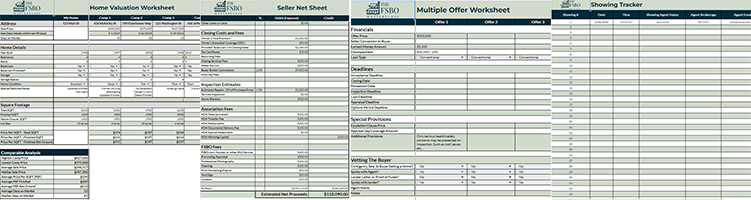
My online course includes three spreadsheets to assist with FSBO financials, including:
- A Home Valuation Worksheet - For accurately pricing your home
- A Seller Net Sheet - To Estimate your sale proceeds
- A multiple-offer worksheet - To evaluate offers
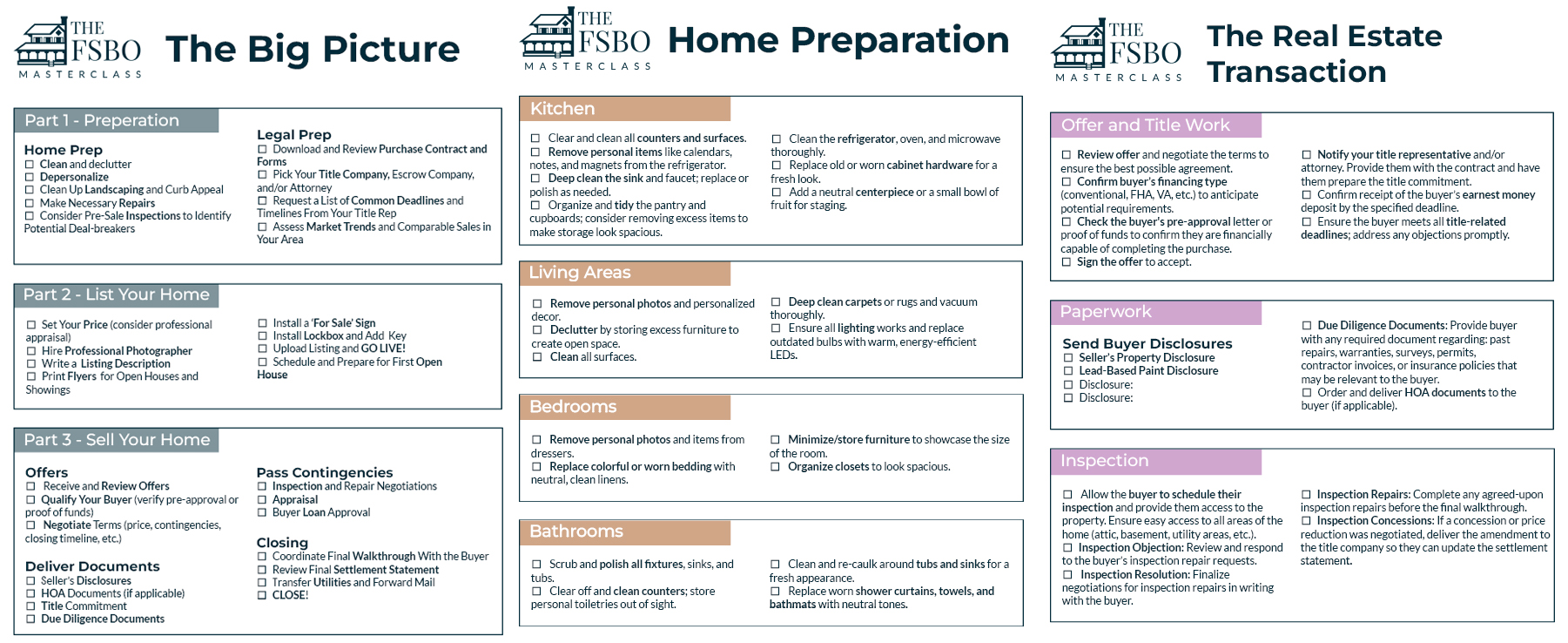
I also have three FREE checklists that walk you through the entire process step-by-step:
- The full FSBO process from start to finish
- How to prepare your home for sale
- What happens during the real estate transaction
These are the exact steps most sellers overlook.
DOWNLOAD them HERE before you list your home.