How to Find Comparable Sales for Your Home (Step-by-Step Guide)
If you’re selling your home For Sale By Owner (FSBO), one of the most important things you need to do is figure out what your home is actually worth.
And the most reliable way to do that?
Comparable sales, also known as “comps.”
Comps are the foundation of how buyers, agents, and appraisers determine value.
In this guide, I’ll walk you through exactly how to find and use comparable sales so you can price your home with confidence.
What Are Comparable Sales (Comps)?
Comparable sales are recently sold homes that are similar to yours.
They give you a real-world answer to this question:
“What have buyers actually paid for a home like mine?”
Why Comps Matter
Comps are used by:
- Buyers (to decide what to offer)
- Appraisers (to justify value)
- Agents (to price listings)
If your price doesn’t align with comps, buyers will notice immediately.
What if Comps Aren’t Available in My State?
Some states in the U.S. are non-disclosure states, which means real estate sale prices are not made public. This limits the data available on websites like Zillow and Redfin.
See our article: How to Price Your Home When There Are No Comps (FSBO Guide)
Step 1: Start With Recently Sold Homes
The most important data comes from sold listings, not active ones.
Where to Find Sold Data
You can find comps on:
- Zillow
- Redfin
- Realtor.com
How to Filter Properly
When searching:
- Select “Sold” listings
- Look at the last 3–6 months
- Stay within your neighborhood if possible. Closer is better.
Why Sold Listings Matter Most
Active listings show what sellers want.
Sold listings show what buyers actually paid.
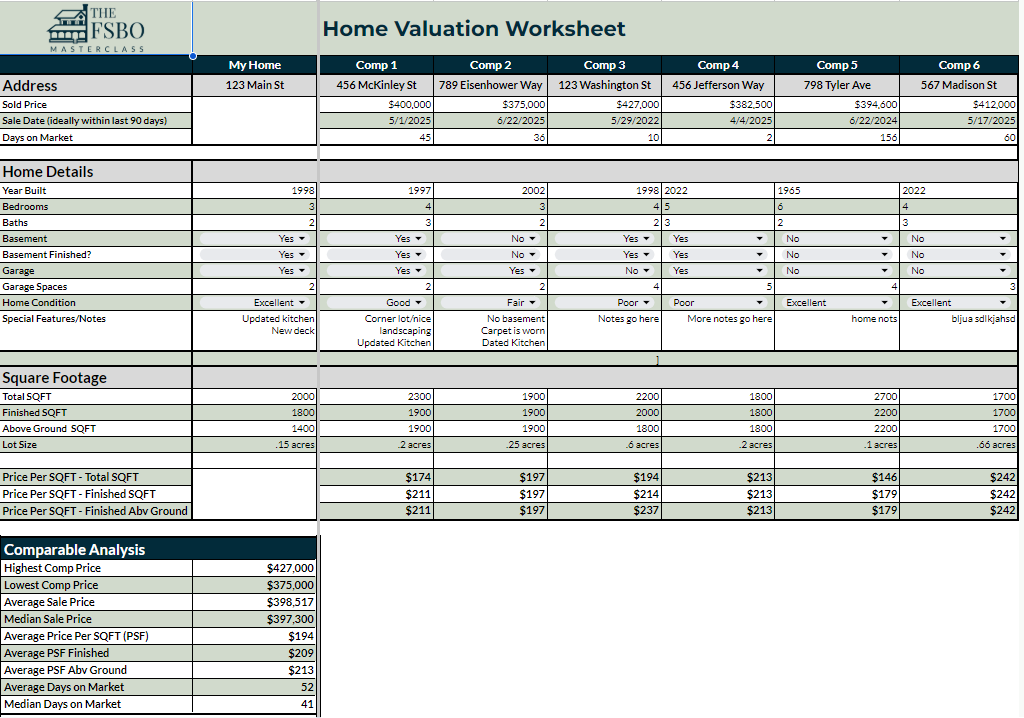
(This Home Valuation Worksheet is included with The FSBO Masterclass online course)
Step 2: Narrow Down to Truly Comparable Homes
Not all nearby homes are good comps, so you need to filter for similarity.
Key Criteria for Good Comps
Location
- Same neighborhood (ideal)
- Similar school district
- Similar surroundings
Size (Square Footage)
Try to stay within:
👉 ±10–20% of your home’s size
Property Type
Compare:
- Single-family to single-family
- Condo to condo
- Townhome to townhome
Bedrooms and Bathrooms
Try to match as closely as possible.
Condition and Upgrades
This is critical.
Compare:
- Updated vs outdated homes
- Renovated kitchens/bathrooms
- Flooring and finishes
PRO TIP
The closer the match, the more accurate your pricing will be.
👉 Read next: How to Price Your Home Without a Realtor (FSBO Pricing Guide)
Step 3: Select 3–5 Strong Comps
You don’t need dozens of comps.
You need a few good ones.
Ideal Number
3 to 5 strong comparable sales
Why Fewer Is Better
Too many comps can:
- Confuse your analysis
- Dilute accuracy
What You’re Looking For
Homes that:
- Recently sold
- Closely match your property
- Represent what buyers chose
👉 Read next: When Should You Reduce Your Price? (FSBO Guide)
Step 4: Adjust for Differences
No two homes are identical, so you need to adjust for differences.
Common Adjustments
Square Footage
Larger homes typically sell for more, so you’ll be looking at price per square foot.
Upgrades
- Updated kitchen
- New bathrooms
- Modern finishes
Lot Size
Bigger lots often add value.
Location Differences
- Better views
- Corner lots
- Quiet streets
Example
If a comp sold for $600,000 but has a fully remodeled kitchen, and yours does not, your value may be lower.
👉 Read next: How to Estimate Your Net Proceeds When Selling FSBO
Step 5: Look at Price Per Square Foot (PSF)
This is an important way to compare homes.
How to Calculate
Sale Price ÷ Square Footage
Example
$600,000 ÷ 2,000 sq ft = $300/sq ft
How to Use It
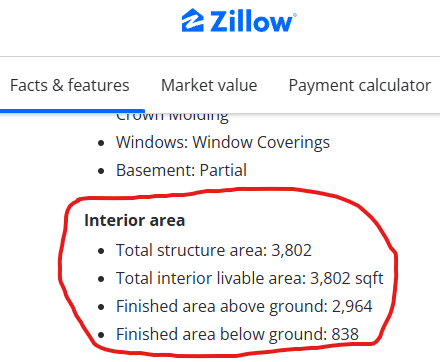
Compare your home’s estimated PSF against similar homes. You also need to consider the PSF of finished spaces vs unfinished spaces, and above ground square footage vs below ground square footage (basements). These different areas will have different values. Zillow should have all the square footage data available for you to make your calculations.
PRO TIP
Price per square foot is a guide, not a rule, and it doesn’t fully account for upgrades or layout.
👉 Read next: Zillow Zestimate vs Real Value: What FSBO Sellers Should Know
Step 6: Compare Against Active Listings
Once you understand sold comps, look at your competition.
Why This Matters
Buyers are choosing between your home and active listings
What to Look For
- Similar homes currently on the market
- Homes that have reduced price
- Homes sitting without offers
Key Question
“Why would a buyer choose my home over these?”
Step 7: Identify a Realistic Price Range
After analyzing comps, you should see a pattern.
Example Range
- Comp 1: $580,000
- Comp 2: $595,000
- Comp 3: $605,000
Your likely range:
$585,000–$600,000
👉 Read next: How Overpricing Your Home Hurts Your Sale (FSBO Guide)
Step 8: Avoid Common Mistakes
Using Only One Comp
This leads to inaccurate pricing.
Relying Too Much on Online Estimates
Zestimates can be helpful, but are not reliable on their own.
Ignoring Condition Differences
Not all homes are equal.
Choosing “Optimistic” Comps
This leads to overpricing.
👉 Read next: The Biggest Pricing Mistakes FSBO Sellers Make (And How to Avoid Them)
Pro Tips From a Real Estate Professional
Buyers Are Comparing
They’re not guessing, they’re evaluating options. Buyer can tell when you price too high.
Appraisers Use the Same Process
Your price should align with what an appraisal would support.
Accuracy Beats Optimism
Pricing correctly upfront leads to better outcomes.
Get an Appraisal
When in doubt, pay a professional for an appraisal.
Frequently Asked Questions
How many comps should I use?
3–5 strong comps is ideal.
How recent should comps be?
Within the last 3–6 months.
What if there are no similar homes?
Use the closest matches and adjust carefully. If you truly cannot find a comparable property, consider getting a pre-listing appraisal. And check out our article: How to Price Your Home When There Are No Comps (FSBO Guide)
Are Zillow estimates (Zestimates) reliable?
They can be a starting point, but should not replace comps.
Final Thoughts
Finding comparable sales is the foundation of pricing your home correctly.
When you:
- Use recent, relevant comps
- Adjust for differences
- Think like a buyer
…you can price your home with confidence.
Download Your FSBO Pricing Tools
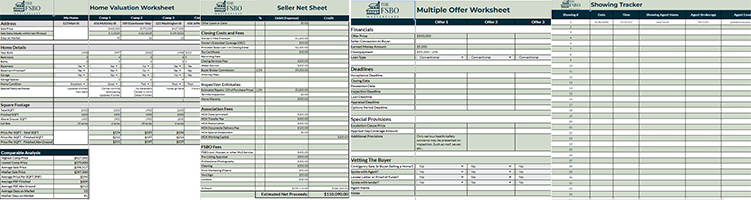
If you want to take this a step further, my online course The FSBO Masterclass has spreadsheets that help you:
- Organize your comps and calculate your home’s value
- Estimate your net proceeds
- Track showings
- Evaluate offers
👉 You can also download your FREE FSBO checklists here.