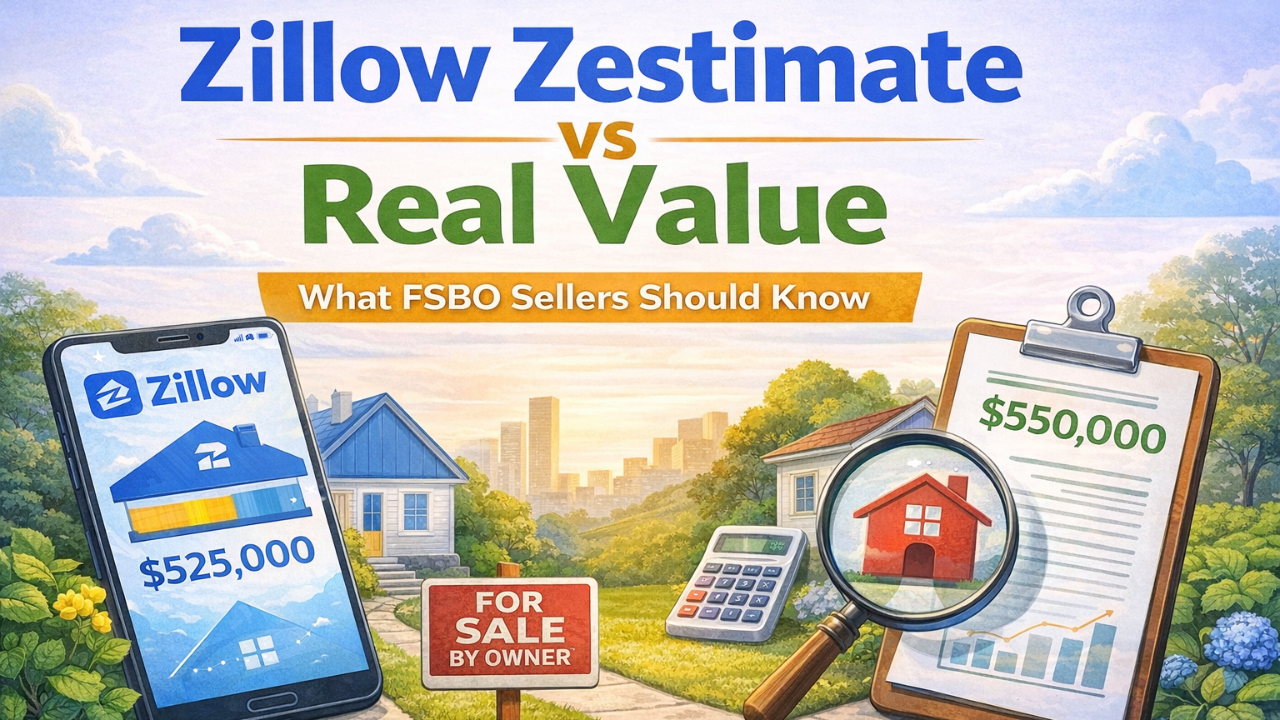
Zillow Zestimate vs Real Value: What FSBO Sellers Should Know
If you're thinking about selling your home For Sale By Owner (FSBO), there’s a good chance you’ve already checked your Zestimate on Zillow.
It’s quick. It’s easy. And it gives you a number instantly.
But here’s the question:
How accurate is that number and should you rely on it to price your home?
The short answer:
Sometimes it’s close. Sometimes it’s very wrong.
In this guide, we’ll break down how Zestimate works, where it gets things right (and wrong), and how to determine your home’s real value.
What Is a Zillow Zestimate?
A Zestimate is Zillow’s automated estimate of your home’s value.
It’s generated using:
- Public data
- Recent sales
- Listing information
- Algorithms
Why It’s So Popular
It gives homeowners:
- Instant feedback
- A general price range
- A starting point
But, it’s still just an estimate and like any automated estimate it has limitations.
👉 Read next: How to Price Your Home Without a Realtor (FSBO Pricing Guide)
How Zillow Calculates Your Zestimate
Zillow uses an algorithm that analyzes large amounts of data.
Data It Uses
- Recent home sales
- Property details (beds, baths, square footage)
- Tax records
- Listing history
What It Doesn’t Fully Capture
- Condition of your home
- Upgrades or renovations
- Layout and functionality
- Unique features
- Local buyer demand nuances
Why This Matters
Two homes may look identical on paper, but have very different values in reality.
👉 Read next: How to Estimate Your Net Proceeds When Selling FSBO
How Accurate Is a Zestimate?
This depends heavily on your location.
In High-Data Areas With Similar Homes
Zestimates can be:
- Relatively accurate
- Within a reasonable range
In Low-Data Areas, Non-Disclosure States, or For Unique Homes
Zestimates are often:
- Less accurate
- Based on incomplete information
- Potentially misleading
Why Accuracy Varies
The algorithm is only as good as the data it has.
👉 Read next: How to Price Your Home When There Are No Comps (FSBO Guide)
Zestimate vs Real Value: What’s the Difference?
Zestimate = An Algorithmic Estimated Value
Automated, data-driven, and generalized, it's an algorithm's best guess at your home's value.
Real Value = Actual Market Value
Your home’s real value is what a buyer is willing to pay in today’s market
What Determines Real Value
- Comparable sales
- Current competition
- Condition
- Buyer demand
- Market conditions
When a Zestimate Is Helpful
Your Zestimate is not useless, it just needs to be used correctly. It can be especially helpful if your home is extremely similar to the homes around it. It’s great for condos, townhouses, and apartments with lots of identical neighboring units. It can also be fairly accurate in suburban neighborhoods full of similar houses.
Good Uses
- Getting a rough starting point
- Understanding general price range
- Spotting major pricing differences
PRO TIP
If the Zestimate says $600k and your comps suggest $590k–$610k, you’re in the right ballpark.
When a Zestimate Can Be Misleading
Unique Homes or Features
Zillow is not great about understanding:
- Custom properties
- Large lots
- Unusual layouts
- Rural properties
- Positive features like views
- Negative features like road noise
Recently Updated Homes
Zillow may not reflect:
- Renovations
- High-end upgrades
Non-Disclosure States
Limited data = less reliable estimates.
Rapidly Changing Markets
Zillow may lag behind real-time market shifts.
👉 Read next: How Overpricing Your Home Hurts Your Sale (FSBO Guide)
The Biggest Mistake FSBO Sellers Make
Treating a Zestimate as the final answer
Why This Is Risky
- It can lead to over or under pricing
- It ignores changing market conditions
- It may not reflect actual buyer perception
What to Do Instead
Use the Zestimate as one data point, not your pricing strategy.
👉 Read next: The Biggest Pricing Mistakes FSBO Sellers Make (And How to Avoid Them)
Better Ways to Determine Your Home’s Value
If you want to price your home correctly, you need a broader approach.
1. Comparable Sales (Comps)
This is the foundation.
Look at:
- Recently sold homes
- Similar size and condition
- Same area
👉 Read next: How to Find Comparable Sales for Your Home (Step-by-Step Guide)
2. Active Listings
These represent your competition.
Ask: “How does my home compare?”
3. Professional Appraisal (Optional)
An appraiser can:
- Provide an objective estimate
- Help validate your price
4. Agent Market Analysis (Optional)
Even if you’re FSBO, an agent can:
- Provide a Comparative Market Analysis (CMA)
- Offer local insight
5. Market Feedback
Once listed, the market tells you:
- If buyers are interested
- If your price is working
👉 Read next: When Should You Reduce Your Price? (FSBO Guide)
How to Use a Zestimate the Right Way
Step 1: Look at the Number
Use it as a reference point.
Step 2: Compare to Real Data
Check:
- Comps
- Active listings
- Market trends
Step 3: Look for Alignment
If multiple sources are similar you’re likely close.
Step 4: Adjust Based on Your Home
Factor in:
- Condition
- Upgrades
- Location advantages
Pro Tips From a Real Estate Professional
A Zestimate Is a Tool, Not a Strategy
It’s useful, but incomplete.
Buyers Don’t Use a Zestimate Alone
They compare active and sold homes and get feedback from their agent for pricing strategies.
The Market Is the Final Judge
Buyer behavior determines real value.
Frequently Asked Questions
Is a Zestimate accurate?
Sometimes, but it depends heavily on location, data quality, and individual properties.
Should I price my home based on a Zestimate?
No. Use it as one input, not your final decision.
Is an appraisal more accurate?
Yes, it provides a significantly more detailed, human analysis.
Why is my Zestimate wrong?
It may not reflect upgrades, condition, or local nuances.
Final Thoughts
Zillow Zestimates can be a helpful starting point, but it’s not the full picture.
If you want to price your home correctly, you need to go beyond automated estimates and look at:
- Real market data
- Buyer behavior
- Comparable homes
When you combine these, you get a much more accurate understanding of your home’s value.
Download Your FSBO Pricing Tools
If you want a structured way to determine your home’s real value, The FSBO Masterclass has tools to help you:
- Analyze comps
- Build a pricing range
- Avoid common pricing mistakes
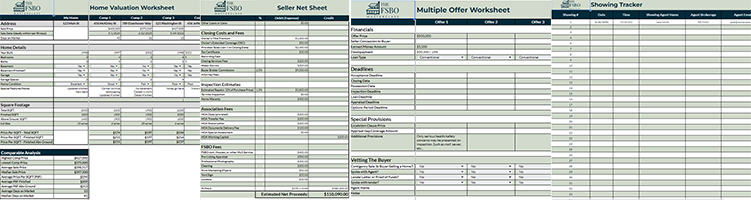
👉 You can also download your FREE FSBO checklists here