What Happens at Closing? (FSBO Step-by-Step Guide)
Closing day is the finish line. After all the pricing, marketing, showings, negotiations, inspections, and paperwork, this is the day your home officially sells. By the time you reach closing, most of the heavy lifting is already done.
In this guide, I’ll walk you through exactly what happens at closing, what you’ll sign, what to expect, and how the sale officially becomes complete.
What Is Closing?
Closing is the final step in the home sale process where:
- Documents are signed
- Funds are transferred
- Ownership officially changes hands
This is the moment the transaction becomes official. Once closing is complete, the home is sold.
👉 Read next: Understanding the FSBO Transaction Process (Step-by-Step Guide)
When Closing Happens
Closing happens after:
- Inspection is complete
- Appraisal is complete
- Loan is approved (if applicable)
- Title work is cleared
- Final documents are prepared
By closing day, the major hurdles should already be behind you.
👉 Read next: What Happens After You Accept an Offer? (FSBO Step-by-Step Guide)
Who Is Involved in Closing?
Several parties are typically involved.
Common Participants
- You (seller)
- Buyer
- Title or escrow company
- Closing agent
- Attorney (in some states)
- Lender (usually indirectly)
Important Note
You usually do not need everyone in the same room at the same time. Many closings happen separately.
👉 Read next: Do FSBO Sellers Need a Title Company or Attorney? (FSBO Guide)
Step 1: Final Closing Documents Are Prepared
Before closing day, the title or escrow company prepares the final paperwork.
This Includes
- Settlement statement
- Deed
- Payoff documents
- Closing disclosures
Why This Matters
These documents outline:
- What is being transferred
- Who gets paid
- What everyone signs
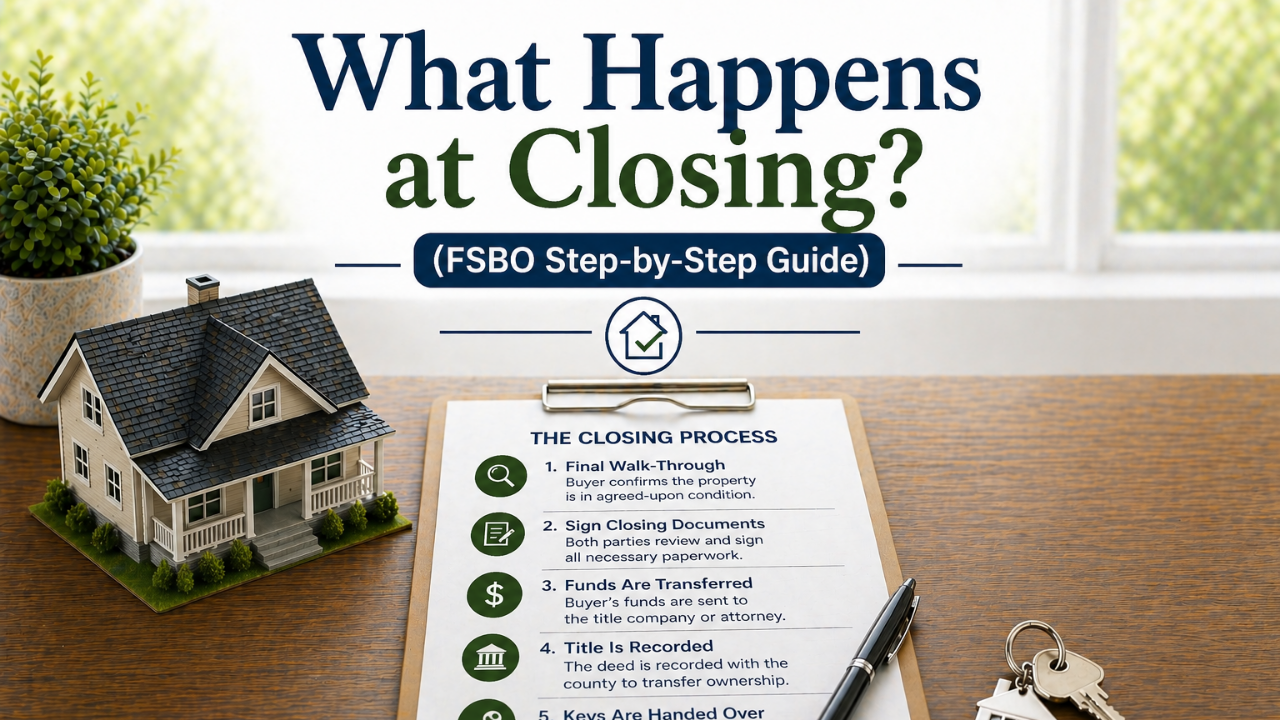
Step 2: The Buyer Completes Their Final Walkthrough
Usually 24 hours before closing, the buyer completes a final walkthrough.
What They Are Confirming
- The home is in expected condition
- Agreed repairs are completed
- Nothing major has changed
Why This Matters
This is the buyer’s final check before signing.
👉 Read next: The Home Inspection Process Explained for FSBO Sellers
Step 3: You Sign Your Closing Documents
On closing day, you’ll sign the seller documents.
Common Documents You May Sign
- Deed
- Settlement statement
- Affidavits
- Tax documents
- Transfer documents
What These Documents Do
They authorize:
- Transfer of ownership
- Payment distribution
- Final transaction terms
How Long It Usually Takes
Typically 30–60 minutes.
Step 4: The Buyer Signs Their Closing Documents
The buyer signs their side of the transaction.
This Usually Includes
- Loan documents
- Closing disclosures
- Buyer settlement paperwork
Why This Matters
This finalizes the buyer’s side of the purchase.
Step 5: Funds Are Sent
Once documents are signed, funds are transferred.
This Includes
- Buyer funds
- Loan funds (if financed)
What Happens Next
The closing company confirms all funds have been received.
👉 Read next: What Happens If the Appraisal Comes in Low? (FSBO Guide)
Step 6: The Deed Is Recorded
Once funding is confirmed, the deed is officially recorded.
What This Means
The ownership transfer becomes official in public record.This Is the moment the home is legally sold.
Step 7: You Get Paid
After recording is complete, funds are distributed.
What Happens
The title/escrow company pays:
- Mortgage payoff
- Closing costs
- Other fees
Then sends you your net proceeds.
Read next: How to Estimate Your Net Proceeds When Selling FSBO
Step 8: Keys, Garage Remotes, and Possession Are Transferred
Once closing is complete, the buyer receives possession based on the contract terms.
What You’ll Typically Hand Over
- Keys
- Garage remotes
- Gate access
- Mailbox keys
This Is the Final Step
At this point the home is officially no longer yours.
What Sellers Should Bring to Closing
Come prepared.
Common Items to Bring
- Government-issued ID
- House keys
- Garage remotes
- Any required documents
PRO TIP
Ask the title company in advance if they need anything specific.
Common Closing Delays (And Why They Happen)
Most closings go smoothly, but delays can happen.
Common Causes
- Funding delays
- Last-minute document issues
- Buyer wire delays
- Title issues
- Repair disputes
Important Perspective
Most delays are annoying, not catastrophic.
Common FSBO Closing Mistakes
Assuming Closing Is Instant
The deal is not done until funds are received and deed is recorded
Forgetting to Bring Required Items
Creates unnecessary delays.
Not Confirming Wire Instructions Carefully
This is important for security.
Leaving Too Much Until the Last Minute
Creates avoidable stress. Make sure your home is ready for the buyer to take possession.
👉 Read next: Common Mistakes FSBO Sellers Make During the Transaction
Pro Tips From a Real Estate Professional
Closing Is Mostly Administrative
The hard part is usually already done.
Stay Available
Be easy to reach in case anything comes up.
Don’t Celebrate Too Early
The deal is done when it funds and records.
Confirm Everything
Especially wiring and possession details.
Frequently Asked Questions
Is closing day the day the house is officially sold?
Yes, once funds are received and the deed is recorded.
How long does closing take?
Usually 30–60 minutes for the seller.
Do I get paid the same day?
Usually yes, after funding and recording.
Do buyer and seller close together?
Not always, many closings happen separately.
Final Thoughts
By the time you get to closing day, most of the difficult work is already behind you. When you understand what happens, what to bring, and what to expect, closing becomes much simpler and less stressful. Once the documents are signed, the funds are received, and the deed is recorded:
You’re done and your home is sold!
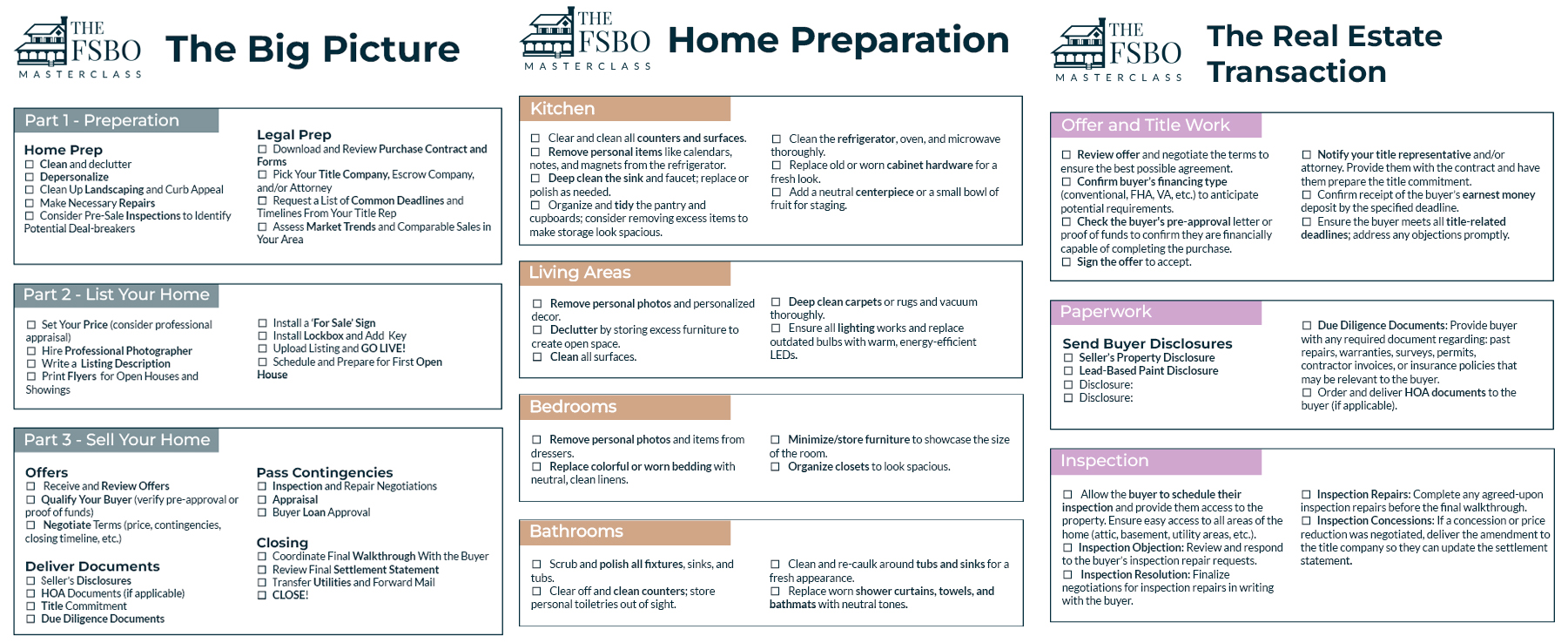
Download Your FSBO Closing Checklist
If you want a step-by-step transaction checklist, I created one to help you stay organized and avoid last-minute surprises.
👉 Download your free FSBO checklists here